


Greetings from the holiday mines!
The other day, I was reflecting on the labor of “putting on” the holidays, even for our petite family of two. Standing on our front porch on a chilly evening, I watched my wife plug in not one, not two, but FOUR strands of Christmas lights only to see that each and every one of them had bit the dust. Gazing out at our neighbor’s impeccable lighting display, I felt like a star in our very own holiday slapstick film. This was shortly after I’d completely coated my hands in an impenetrable layer of pine tree sap while attempting to right our tippy Christmas tree. We’ll get there in the end, surely!
Right under the deadline, I’ve got a new holiday cookie idea for you: a deeply spiced mulled wine pear butter linzer. The title is a mouthful but they’re truly so good. In years past I’ve brought you two or three holiday cookies, but I’m feeling good about paring back this time. You can find recipes for chestnut sandwich cremes and maple pecan panforte here, and recipes for panettone cookies, pistachio, olive oil, and cranberry jam bars, and coffee digestives here. I also whipped up two new recipes for paid subscribers of Nicola Lamb’s Kitchen Projects : fruitcake bon bons and stollen muffins.
In case you missed it, I’m hosting a cake raffle! The proceeds go to supporting people experiencing food insecurity in New Orleans right now. You can learn more details here. Only locals can win, but anyone can donate if you’re so moved!
On to the show!
The following recipe is sponsored by California Wines.
I’m thrilled to be presenting you with a recipe in partnership with California wine today! Just in time for the holidays, I have a mulled wine pear butter for you - a fruity, deeply spiced, burgundy-toned spread that is equally delicious tucked into a linzer cookie as it is on a cheese board. In fact, I’ve already put a sharp cheddar and pear butter grilled cheese sandwich on my menu plan for next week. If you’re partial to the dramatic, jewel-like glow of red-wine poached pears, I know you’ll love this pear butter.
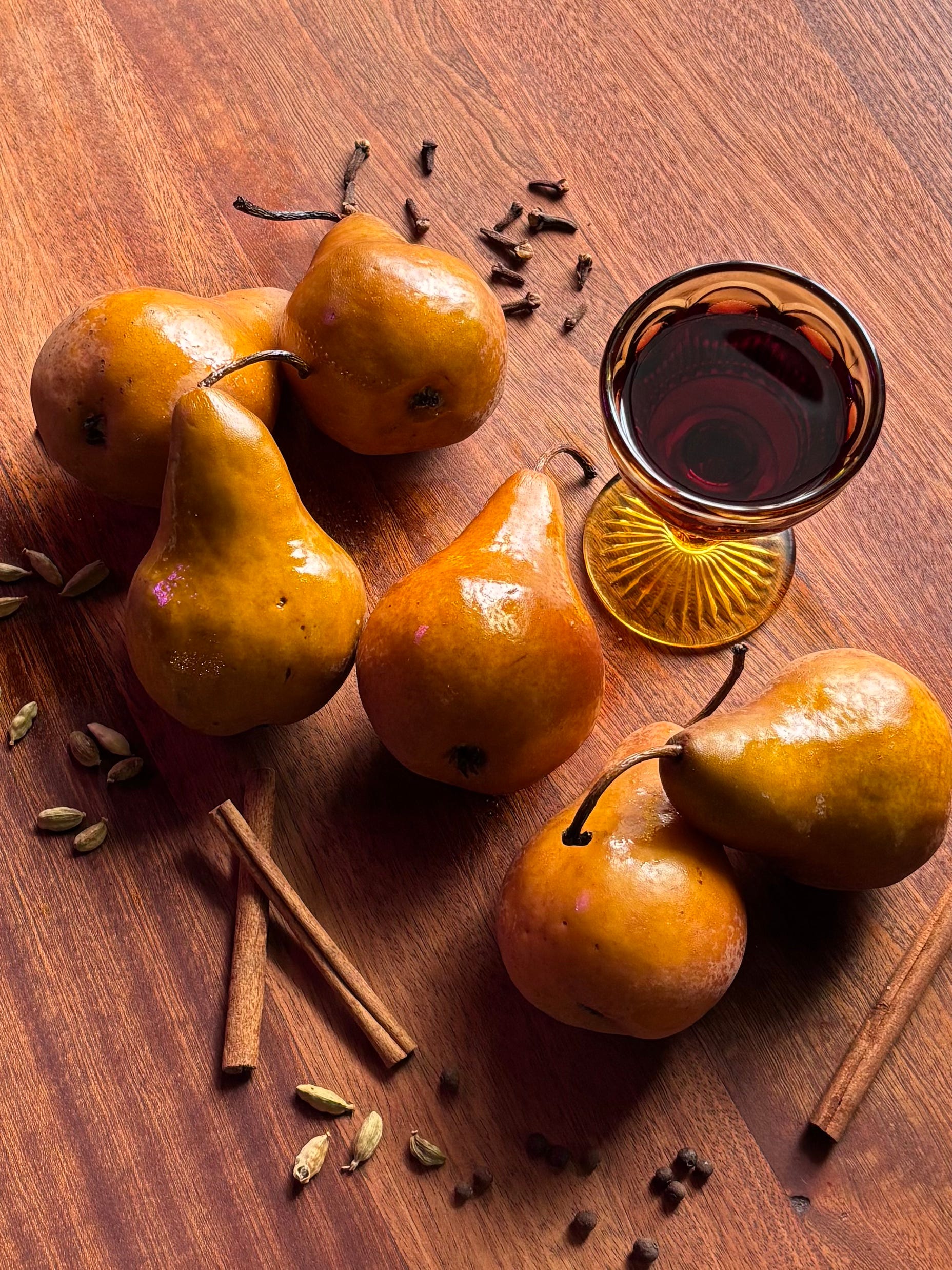
When cooking with wine, it’s paramount to choose a bottle you’d enjoy drinking as-is. This fruit butter calls for infusing a fruity, low-tannin California red, like a pinot noir or grenache, with winter spices. We then cook the wine down with pears and sugar until it is thick, glossy, and spreadable. The result is a concentrated expression of each element’s flavor: the floral-honey aroma of pears, the plush jamminess of a California red, and the warming prickle of cardamom, clove, and cinnamon. It takes a little while to cook the pear butter on the stovetop, but I consider this a bonus as it will fill your kitchen with the scent of mulled wine. Once cool, the pear butter makes an exceptional filling to a linzer cookie, perfect for rounding out your holiday cookie plate.
The recipe below calls for not-quite a full 750 ml bottle of wine - all the better to reserve a glass for enjoying alongside the fruits of your labor, or for sipping while you stir the pear butter on your stove. I loved the sensation of nibbling on a mulled wine pear butter linzer cookie (say that three times fast!) with a glass of the same wine I used in the recipe. It feels like a conversation come full circle: first, the bright, fluid acidity of the wine, then the vivid, spicy sweetness of the mulled wine pear butter, and back again.
Mulled Wine Pear Butter
Makes roughly 2 heaping cups of pear butter
Recipe notes: You’ll want to pick a low-tannin red, like pinot noir or grenache, since this recipe calls for reducing the wine a great deal. By the same token, resist being more liberal with the warming spices and sugar than I call for here. Once the pear butter is reduced, it will read more deeply spiced and sweeter than in the beginning of the cooking process. I don’t bother to peel my pears for this recipe, and you shouldn’t feel the need to either. A last important note: this recipe has not been tested for shelf-stable canning safety. Pears are a low-acid fruit, so you shouldn’t assume this pear butter is safe for canning. I treat it like a refrigerator jam, and chill or freeze it for long term storage.
2 ½ cups / 600 ml California red wine, such as pinot noir or grenache
⅔ cups / 148 grams brown sugar, light or dark
¼ cup + 2 tablespoons / 75 grams granulated sugar
3 tablespoons / 63 grams honey
1 large piece of orange peel, white pith removed
1 cinnamon stick
6 cardamom pods, whole
3 cloves, whole
1 star anise, whole
8 scant cups / 1060 grams pears, de-seeded with stems removed, roughly chopped (about 6 large pears)
3 tablespoons / 45 grams lemon juice, freshly squeezed
In a large, non reactive pot, combine the wine, brown sugar, granulated sugar, honey, orange peel, cinnamon stick, cardamom pods, cloves, and star anise. Bring to a boil over medium heat, stirring until the sugar is fully dissolved, then reduce the heat and simmer for ten minutes. Turn off the heat and allow the wine to infuse for an additional twenty minutes. Then, strain the orange peel and spices out of the wine.
Return the wine to the pot (no need to wash it) followed by the chopped pears and lemon juice. Cook over medium heat for about fifteen minutes, until the pears are soft and infused with red color. If your pears are very ripe, this could happen quite a bit faster.
Puree the wine and the pears together until very smooth. Take care pureeing the hot liquid: do it in small batches for your safety. You may also use an immersion blender. Return the pear puree to the pot and cook over medium-low heat, stirring often, for 35 to 40 minutes. The pear butter will feel quite loose at first and slowly thicken. The thicker the pear butter gets, the more you should stir it so that the bottom doesn’t scorch. You’ll also want to lower the heat as the pear butter progresses, so that it doesn’t spit furiously at you (though you may still need to wipe your backsplash down when done, and consider wearing long sleeves).
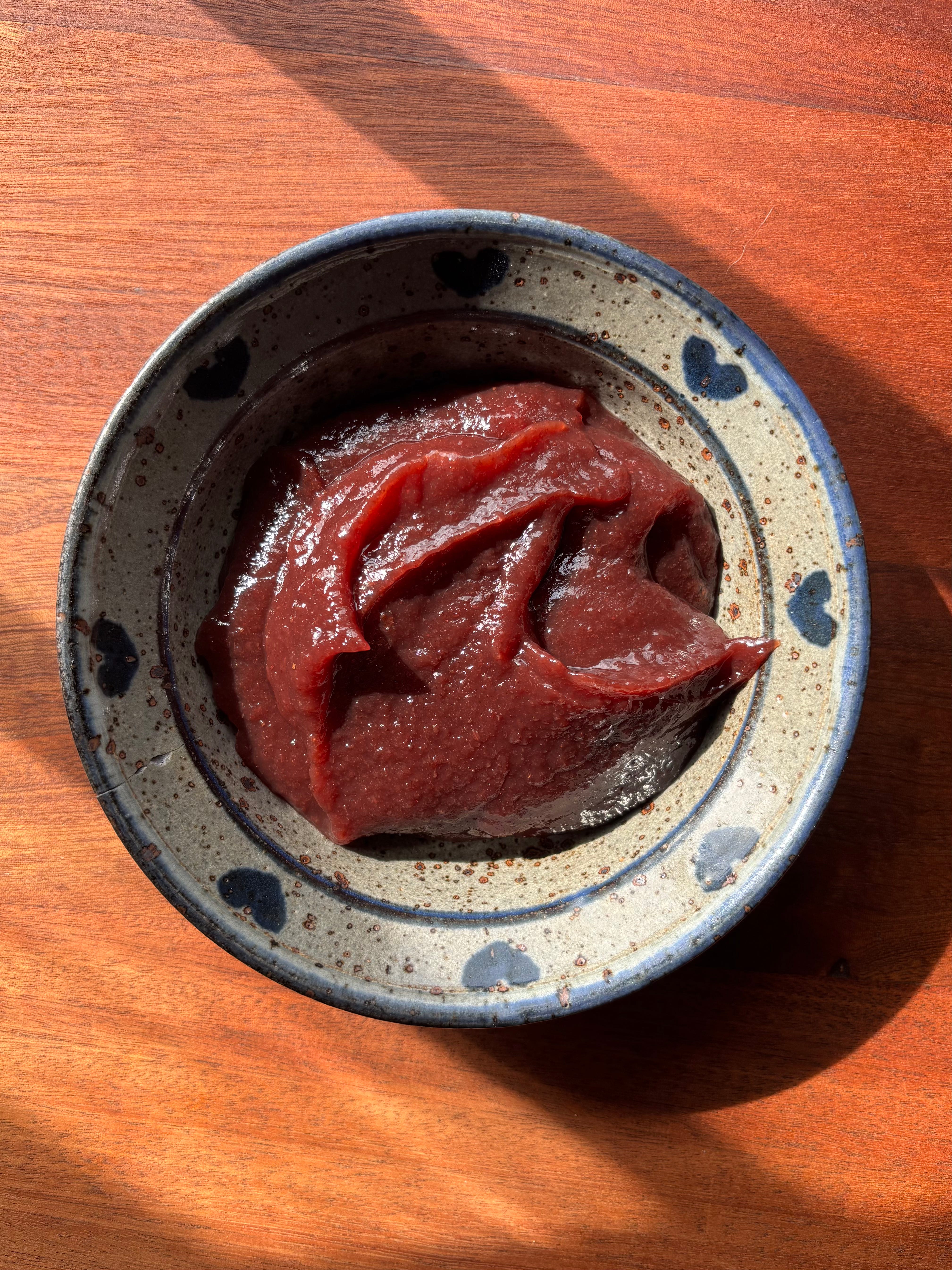
When the pear butter is done, it will be thick enough that your spatula leaves a distinct path in the bottom of the pan, and the butter will be bubbling furiously. My friend Camilla Wynne describes it like so in her book Jam Bake: “when you pull the the spatula through, it will sound like a slavering ogre”. I’ve never heard it said more accurately!
Scrape the finished mulled wine pear butter into a heat proof container and allow it to cool. Refrigerate it for long-term storage. It will last for several weeks. If you like, use it to fill linzer cookies (recipe follows).
Bonus Recipe: Linzer Cookie Dough
This is a very traditional linzer cookie dough with a touch of almond flour for tenderness. I used to prefer my linzer cookies very golden brown and crisp. Lately, I like to bake them until they have only just barely begun to turn golden. After I fill them with jam, I age them for about six hours before serving so that they soften even more.
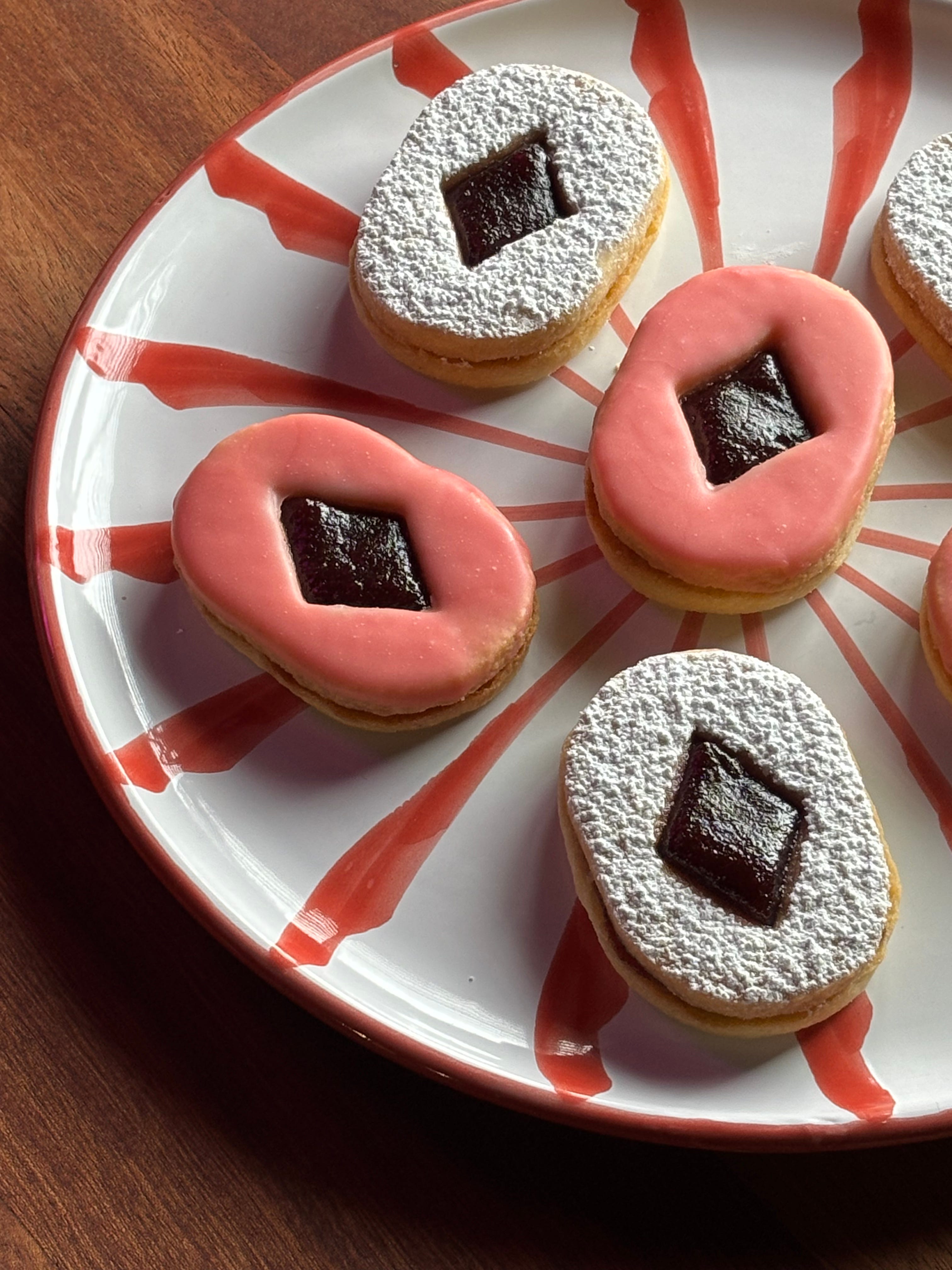
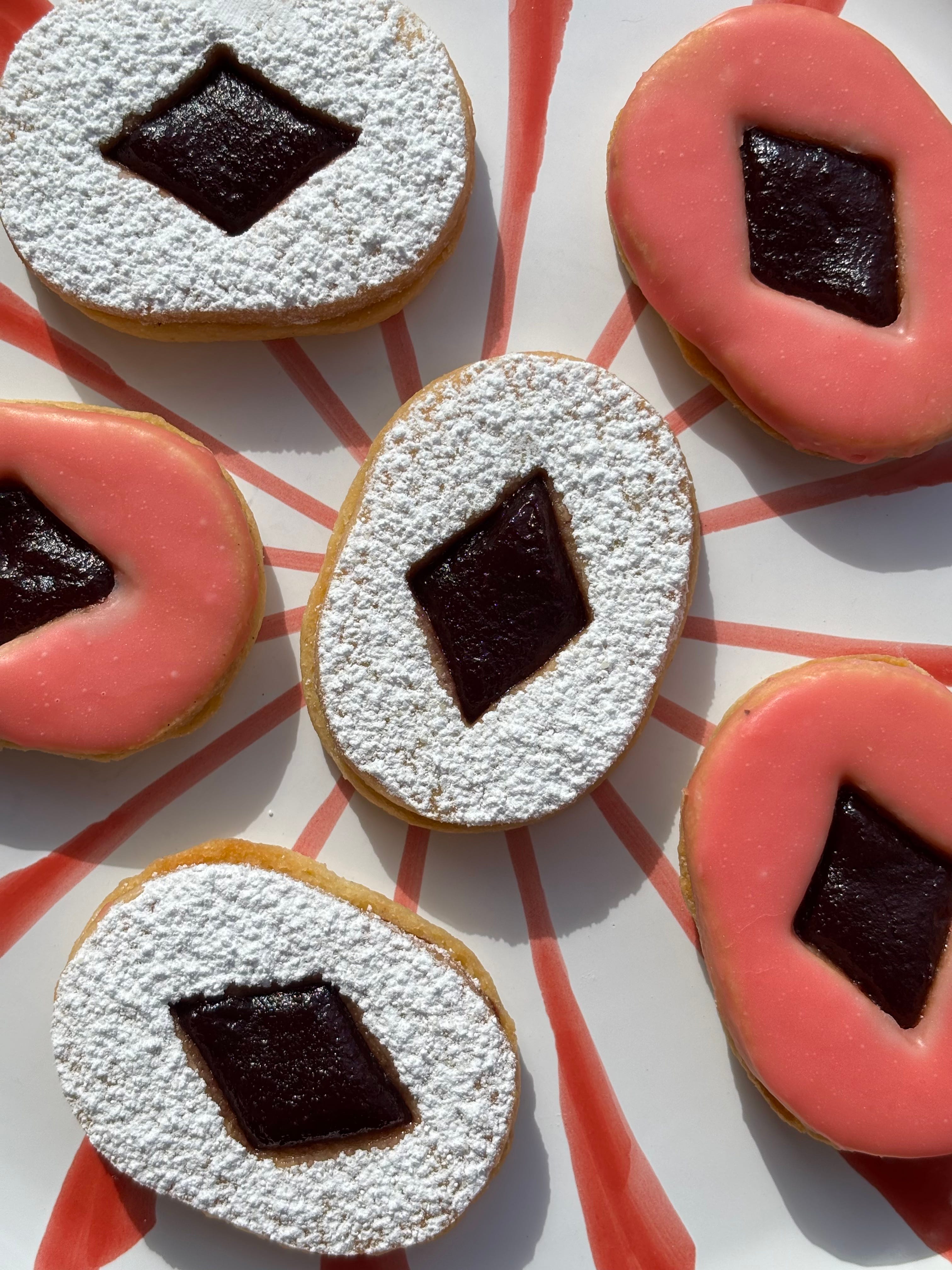
If you’re strict with your rolling and re-rolling and punch your cookies out carefully, you can get 18 one-inch round linzers from this recipe. However, I almost always double it so I have plenty of dough to work with, especially if I’m trying to hit a particular total number of finished linzers for a cookie box. I love making linzer cookies in various sizes and shapes for one platter (so elegant!). The linzers pictured below are giant, three-bite cookies, almost like a petite dessert unto themselves. You can glaze them with either a flat icing or dust them with powdered sugar (I used a little grenadine and lemon juice to make the pictured pink icing).
Almond Linzer Cookie Dough
Makes about 18 one-inch linzer cookies.
1 ¾ cup / 210 grams all purpose flour
½ cup / 45 grams almond flour
½ teaspoon salt
⅛ teaspoon nutmeg, freshly grated (optional)
1 ½ sticks / 170 grams butter, cool room temperature (between 65 and 68°F)
½ cup / 100 grams sugar
1 tablespoon + 1 teaspoon milk
½ teaspoon vanilla extract
In a small bowl, combine the all purpose flour, almond flour, salt, and nutmeg.
In the bowl of a stand mixer fitted with a paddle attachment, combine the butter and sugar. Cream on medium-low speed for about a minute, until the sugar is fully incorporated into the butter and just beginning to lighten (no need to cream “until light and fluffy”). Add the flour mixture and mix until just combined, about one minute. The dough might look quite crumbly. Add the milk and vanilla and continue to mix on low speed until a cohesive dough has just formed. You may need to knead it gently by hand until it just comes together.
Immediately place the dough between two sheets of parchment paper and roll into a thin, even sheet about ¾ centimeter high. Slide the parchment onto a sheet tray and place in the fridge. Chill until firm, about 20 minutes.
When the dough is firm, cut out your cookie rounds. Using a second, smaller cookie cutter, cut a hole in the center of half the cookies. Gather up the scraps of dough and repeat the rolling, chilling, and cutting process once more. Keep unbaked cookies cold while you’re working.
When you are ready to bake your cookies, preheat the oven to 350°F. Place the cookies on two sheet trays. Bake for 11-14 minutes rotating once from top to bottom and front to back, or until the cookies are just beginning to tinge golden brown at the base and edges and feel firm to the touch. Let cool completely.
When you are ready to fill your cookies, dust the “top” halves with powdered sugar (or glaze with a flat icing). Turn the remaining “bottom” cookies over so that their flatter sides are now facing up. Pipe a dollop of pear butter into the center of each cookie, then place the top cookie on it to make a sandwich.
Linzer cookies can be stored in a covered container at room temperature for up to 24 hours, or refrigerated for up to three days.
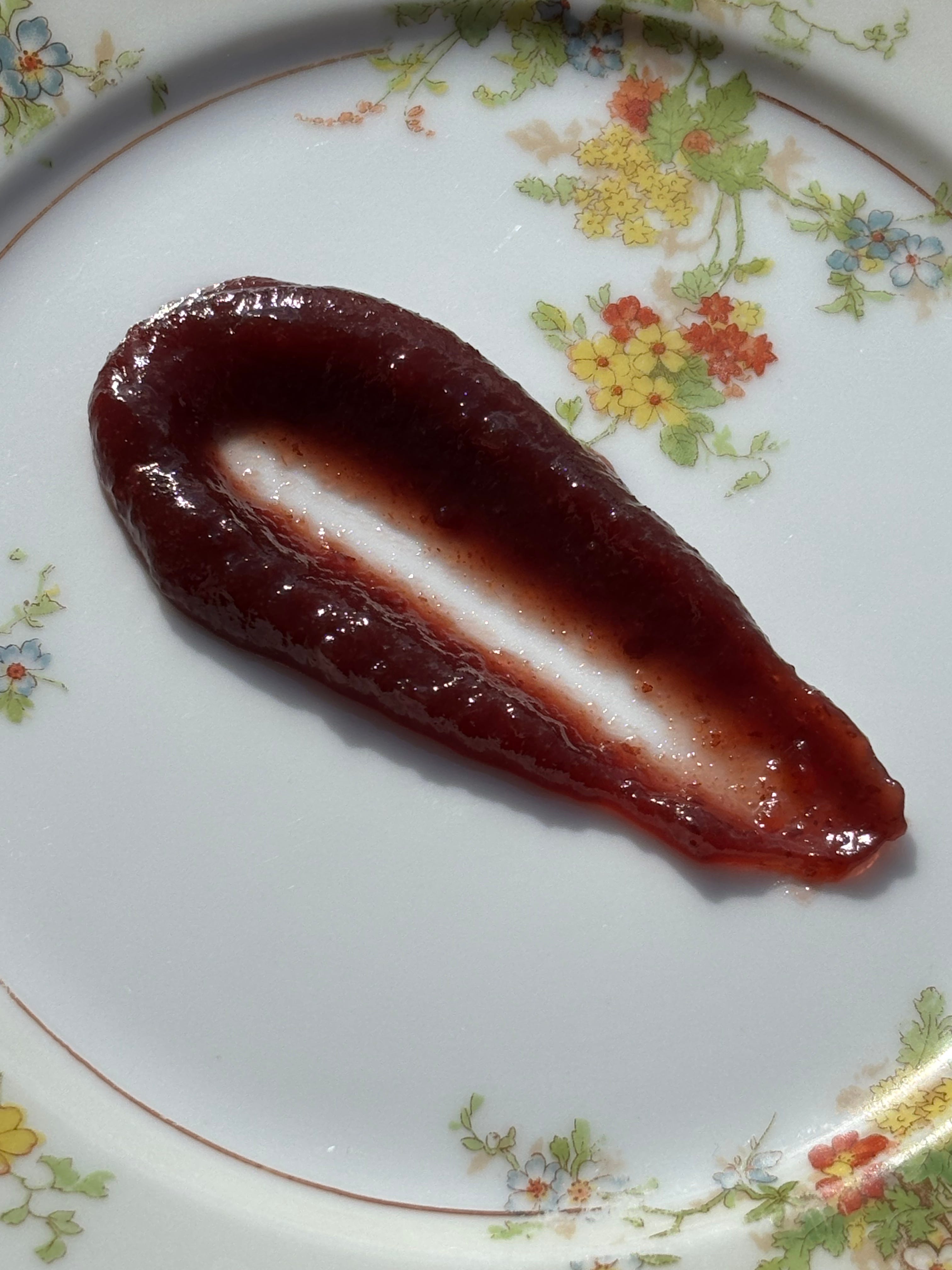
Made the pear butter today and it is extraordinarily good!